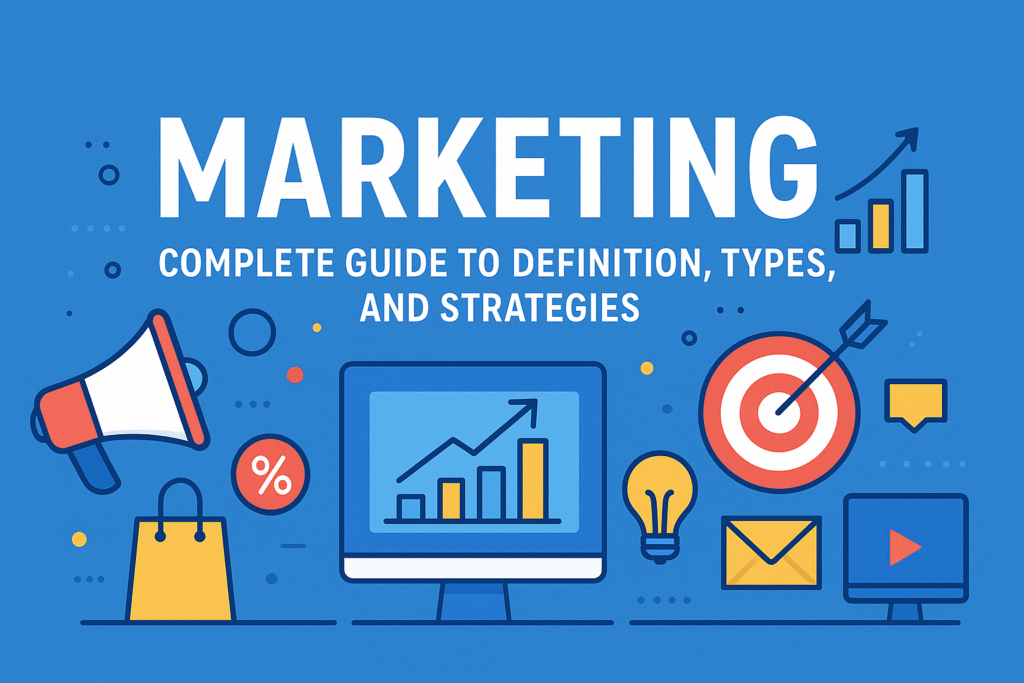

The term “Marketing” is something most people have heard, but do you really understand what it means?
In this comprehensive guide, we will explore the definition of marketing, its core principles, different types, and modern strategies that can help any business grow.
If you read this blog thoroughly, you won’t need to search for “What is Marketing?” anywhere else.
What is Marketing?
Marketing is a business process used to create awareness, generate interest, and drive sales for products or services.
It involves a series of activities designed to connect the right product with the right audience at the right time.
In simpler terms, marketing acts as a bridge between the customer and the product, ensuring that people understand its value and are motivated to make a purchase.
Meaning of Marketing
The Hindi term for marketing is “Vipan” (विपणन).
It revolves around the Marketing Mix — a strategic plan based on the 4Ps of Marketing:
-
Product – What are you selling? (Features, design, packaging, quality)
-
Price – How much will it cost? (Pricing strategies, discounts)
-
Place – Where will it be available? (Retail, online, distribution channels)
-
Promotion – How will you reach your audience? (Advertising, social media, PR)
Key Features of Marketing
Marketing has several important characteristics that make it essential for business success:
-
Human-driven Activity – While tools and technology help, marketing decisions and creativity still come from people.
-
Social and Economic Function – It operates within social norms but also focuses on generating profit.
-
Never-ending Process – Methods evolve, but marketing itself never stops.
-
Customer-Centric – Businesses that work for the benefit of customers often see higher sales and loyalty.
Types of Marketing
Marketing can be classified in various ways. The most common categories are:
1. Offline (Traditional) Marketing
Includes TV ads, radio spots, print media, billboards, posters, and in-person events.
2. Online (Digital) Marketing
Encompasses internet-based strategies like SEO, content marketing, social media, email campaigns, and paid advertising.
3. Specialized Marketing Types
Below are some popular forms of marketing in detail:
Acquisition Marketing
Focused on attracting new customers through SEO, blogs, landing pages, social media ads, and Google Ads. The goal is to convert new visitors into leads.
Behavioral Marketing
Uses data to study audience behavior — such as search history, online interests, and interactions — to deliver personalized campaigns.
Brand Marketing
Aims to build brand value rather than immediate sales. Involves logo design, brand identity, and awareness campaigns.
Advertising
Paid promotion via TV, radio, newspapers, magazines, billboards, social media, and online ads to spread awareness and encourage purchases.
Affiliate Marketing
Promoting another company’s products through your website, blog, or social media in exchange for a commission on each sale.
Event Marketing
Hosting or participating in events — both online and offline — to create strong relationships with target audiences.
Product Marketing
Positioning and promoting a product to the right market segment through demos, targeting strategies, and clear messaging.
Search Engine Marketing (SEM)
Boosting website visibility in search engines through Search Engine Optimization (SEO) or Pay-Per-Click (PPC) ads.
B2B (Business to Business) Marketing
Marketing products or services to other businesses, often involving longer sales cycles.
B2C (Business to Consumer) Marketing
Targeting individual customers for faster purchase decisions, often via social media.
Content Marketing
Creating and sharing valuable content — articles, videos, podcasts, infographics — to attract and retain customers.
Inbound Marketing
Attracting customers through helpful content and resources so they come to you naturally.
Outbound Marketing
Pushing your message through paid ads, cold calls, or mass emails to reach a broad audience.
Benefits of Marketing
Marketing plays a vital role in business growth. Its key benefits include:
-
Brand Awareness – Helps customers recognize and trust your brand.
-
Increased Sales & Revenue – Drives business growth through targeted promotion.
-
Customer Acquisition – Attracts new customers through strategic campaigns.
-
Cost-Effectiveness – Digital marketing reduces expenses compared to traditional methods.
Conclusion
Marketing is not just about selling products — it’s about creating value, building trust, and forming lasting relationships with your customers.
Whether you use traditional methods or modern digital strategies, the key is to understand your audience, deliver value, and adapt to changing market trends.